Dental Health Activities for Preschoolers: 8 Ideas
The habits that decide whether a child brushes without a fight are set somewhere between three and five, well before they can be reasoned with about cavities. These eight activities teach the same few ideas from different angles: brush twice, brush for long enough, and sugar matters more than most people think. All of them use things you already have, apart from the chart, which prints on one sheet.
Why dental health matters this early
Baby teeth are often treated as temporary and therefore not worth much effort, which is the wrong way round. They hold the space the adult teeth grow into, so losing one early to decay can push everything that follows out of line. They also do the work of chewing and of forming sounds clearly, and a child with toothache eats less and speaks less.
The other reason is simpler. A child who has brushed twice a day since they were three does not experience it as a chore to be negotiated. It is just something that happens before bed, like putting pajamas on, and that is worth far more than any single lesson about teeth.
Eight dental activities for preschoolers
1. A brushing chart
Print the chart below and stick it inside the bathroom door at your child’s height. Two boxes a day, one for the morning and one for bedtime, and a sticker goes in each one after brushing. The columns are marked with a sun and a moon rather than words, so a child who cannot read yet can still work out where the sticker goes. Seven days of full boxes is the natural point to make a small fuss about it.
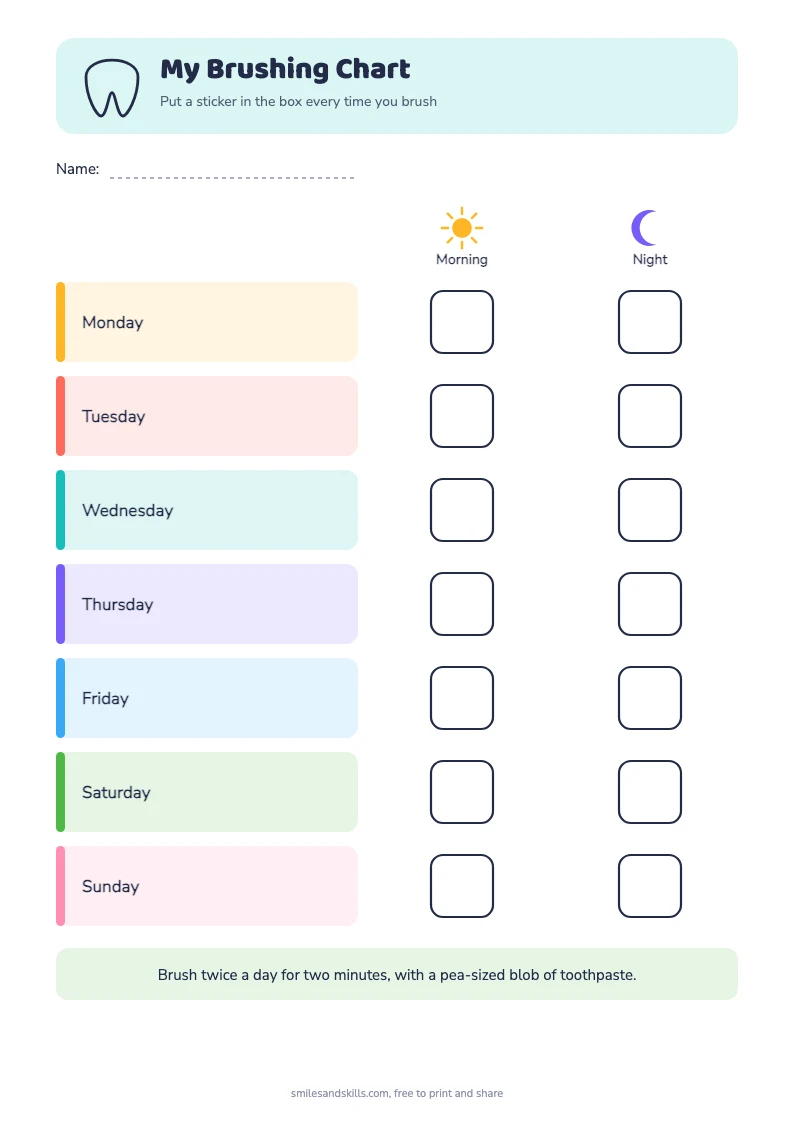
Download the brushing chart (PDF). A4, free to print, no sign-up.
2. The eggshell experiment
An eggshell is close enough to tooth enamel to make the point. Put one hard-boiled egg in a cup of cola and another in a cup of water, and leave both overnight. In the morning the one in cola is stained brown and the shell has gone soft and chalky. Let your child scrub it with an old toothbrush and watch how much comes off. This does more in five minutes than a fortnight of being told that fizzy drinks are bad for teeth.
3. Paint the tooth, then brush it clean
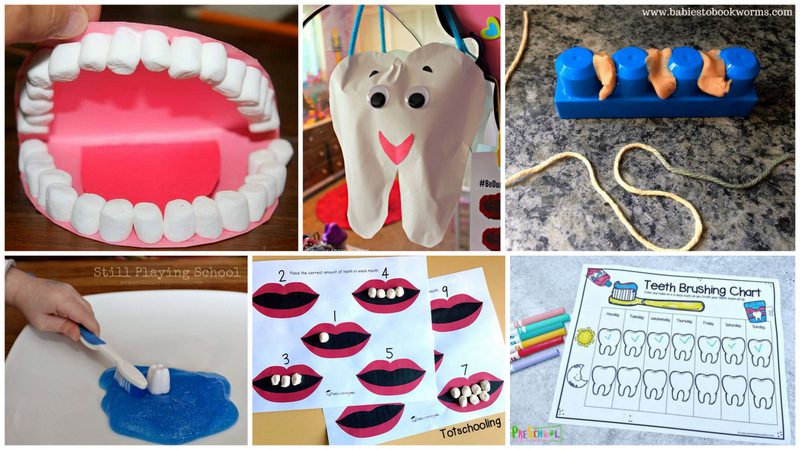
Draw a large tooth shape on paper, or laminate one so it can be reused. Let your child scribble all over it with a washable marker, which is the plaque. Then hand them a toothbrush and a little water and ask them to get it clean. They will discover for themselves that the edges and corners take the most work, which is exactly where they miss on their own teeth.
4. A two minute song
Two minutes is much longer than a preschooler thinks it is, and telling them to keep going rarely works. Pick one song they know that runs about that long and play it every time. Brushing lasts until the song ends, which turns an argument about time into something with an obvious finish. Any song works, and letting them choose it makes them far more cooperative about the rule.
5. Sorting food into everyday and sometimes
Cut pictures of food from a magazine or a supermarket leaflet and sort them into two piles: things we eat most days, and things we eat sometimes. Keep the language at that, rather than good and bad, because a four year old who has been told sweets are bad will simply stop mentioning them. Cheese, apples and bread go in one pile, cake and juice in the other, and it is the sorting that does the teaching.
6. Playing dentist
Line up some teddies and let your child be the dentist. They need a mirror, a torch and somewhere for the patient to sit. Ask them to count the teddy’s teeth out loud and say which ones need brushing. The point is the rehearsal. A child who has been the dentist twenty times is measurably calmer when it is their turn in the chair, and it gives you something to refer back to on the day.
7. Flossing with yarn
Press play dough into the gaps of an egg box or a row of building bricks to stand in for food stuck between teeth, then give your child a length of yarn and let them work it out. It is fiddly, which is the point: it shows why flossing takes a moment and why a brush alone does not reach everywhere. This one suits four and up, since younger hands find the yarn frustrating.
8. A tooth chart to count on
Draw a simple mouth with twenty spaces and let your child fill in the teeth they can feel with their tongue. Most preschoolers have twenty by the age of three. Counting them is real counting practice, and it gives you a way to talk about the ones that will come out later without it being alarming. Keep the sheet and mark the date when the first one goes.
Tips for parents and teachers
- Brush your own teeth alongside them. Copying works better than instruction at this age.
- Let them hold the brush first, then finish the job yourself. Most children cannot brush effectively alone until around seven.
- Use a pea-sized blob of fluoride toothpaste and teach them to spit rather than rinse.
- Book the first dental visit by their first birthday, so the chair is familiar before anything needs doing.
- Keep sugary drinks to mealtimes. It is how often teeth meet sugar that causes damage, not how much arrives at once.
Frequently Asked Questions
What Are Fun Dental Activities For Preschoolers?
Fun dental activities include brushing games, tooth fairy crafts, and dental-themed storybooks.
How To Teach Preschoolers About Dental Hygiene?
Use engaging stories, fun games, and interactive activities to teach the importance of dental hygiene.
Why Are Dental Activities Important For Kids?
Dental activities help kids understand the importance of oral health and establish good habits early.
How Often Should Preschoolers Brush Their Teeth?
Preschoolers should brush their teeth twice a day, in the morning and before bedtime.
Where to start
Dental activities for preschoolers can be fun and educational. These activities help kids learn about dental health. Start teaching good habits early. Your kids will thank you!